
Landscape Steps & Stairs | Shorewood & Minnetonka MN
Because our properties are not flat, we need steps and stairs to easily traverse grade changes. This utilitarian function can really look good with smart design and great materials.
Steps That Are Both Safe and Beautiful
Because our properties in the Lake Minnetonka area are not flat, we need steps and stairs to easily traverse these areas. This utilitarian function can really look good with smart design and great materials. Steps connect your deck to your patio, your patio to your yard, your driveway to your front door, and your upper terrace to the lakeshore below. Done well, they become design features that add movement and rhythm to the landscape.
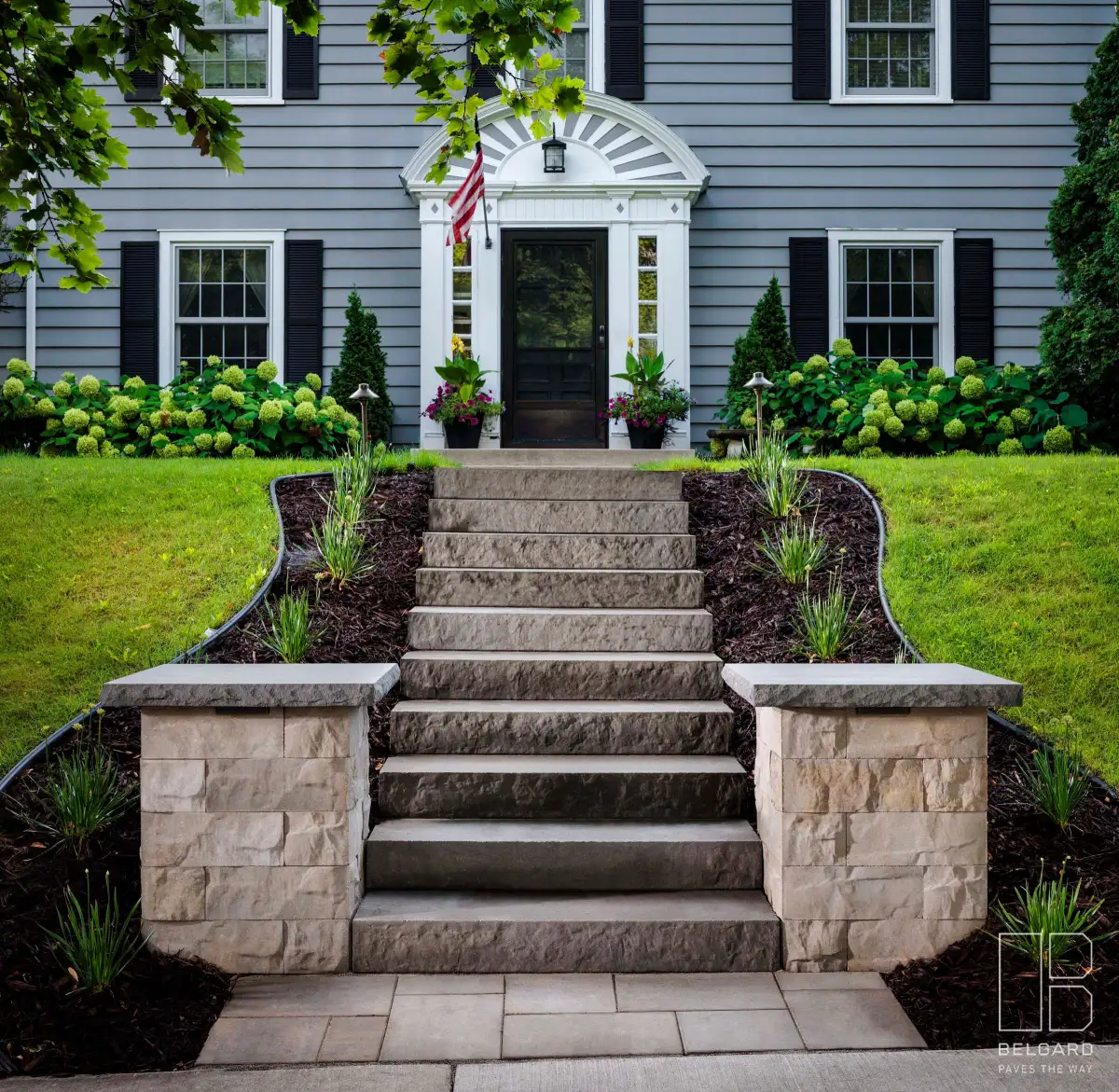
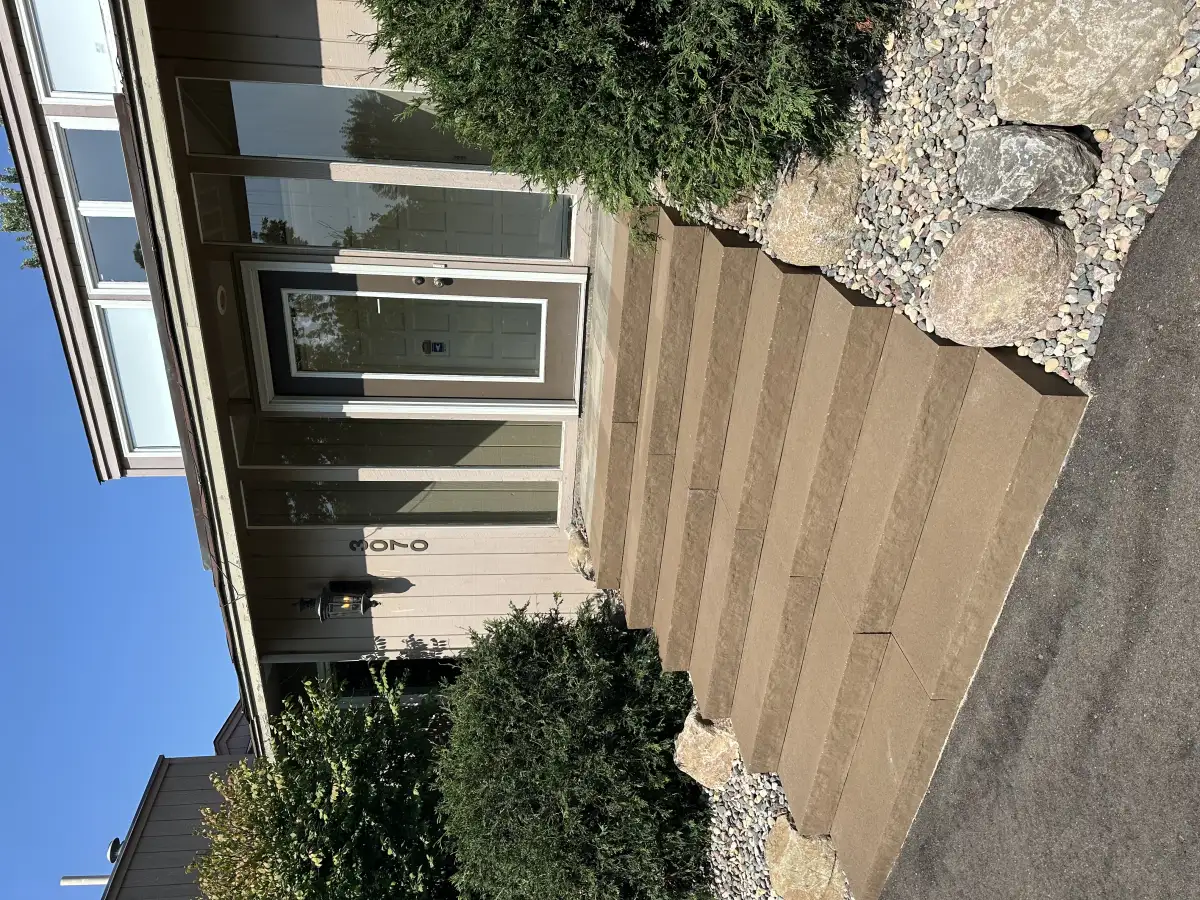
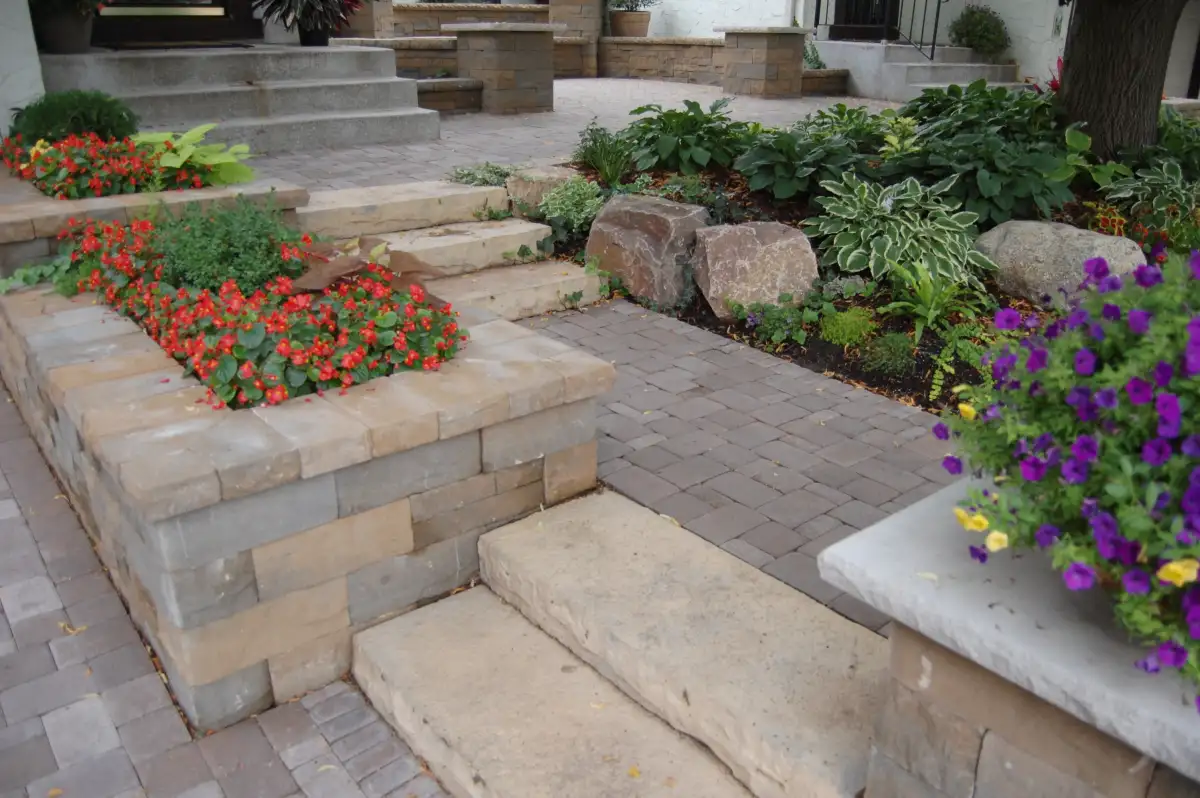
We build landscape steps from decorative concrete pavers, natural stone slabs, modular block, and wood or composite materials depending on the context. Steps integrated into a retaining wall use the same material as the wall for a cohesive look. Steps connecting a deck to a patio transition from deck material at the top to paver or stone at the bottom. Every set of steps we build meets Minnesota building code for riser height (maximum 7.75 inches), tread depth (minimum 10 inches), and uniformity, meaning every step in a run is the same height so your foot always knows what to expect.
Safety in Minnesota means accounting for ice and snow. We select materials with textured surfaces that provide traction when wet, install recessed LED step lights for visibility in darkness, and design drainage to prevent water from pooling on treads and freezing into sheets of ice.
Step Material Options
Decorative Concrete & Pavers
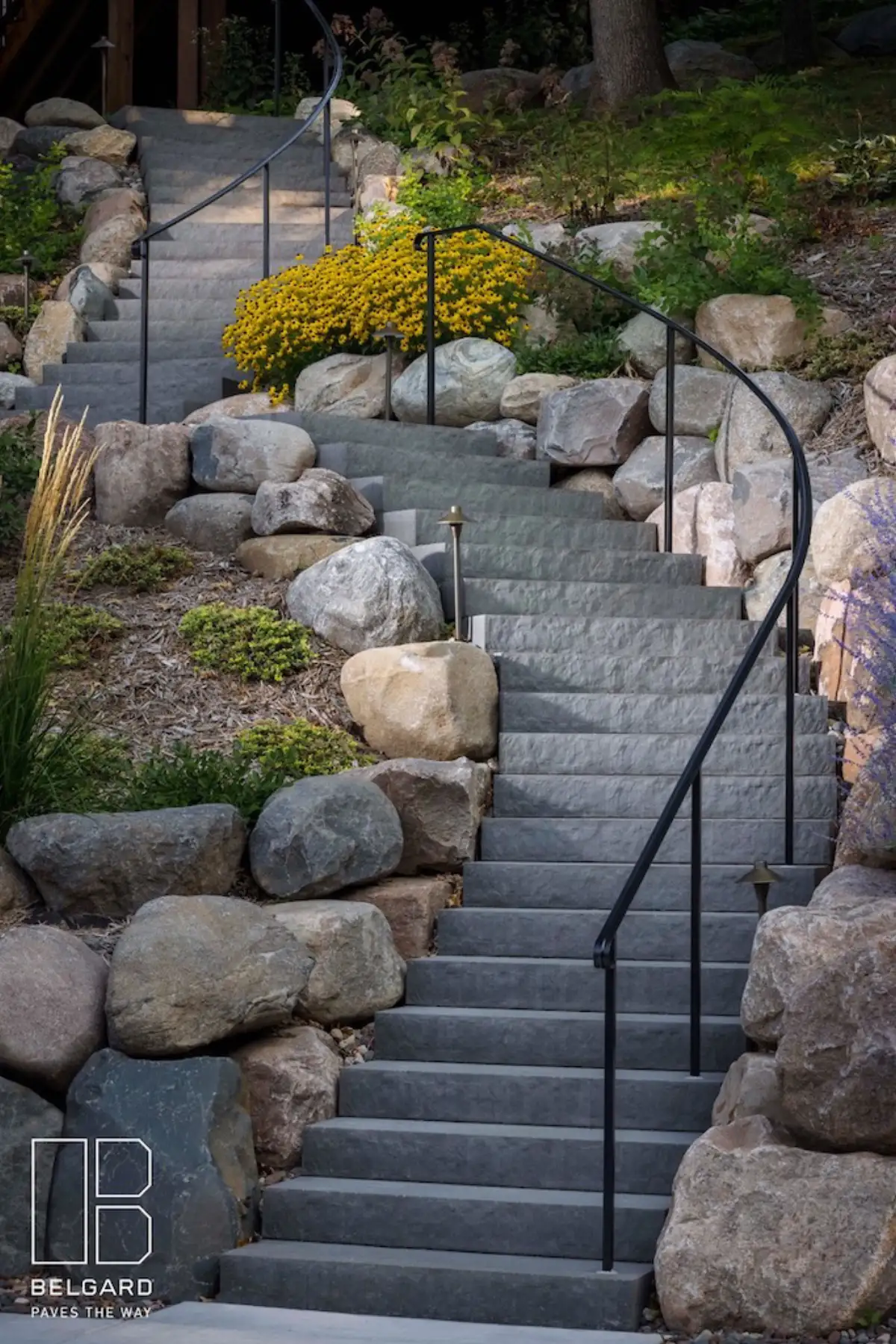
Belgard and similar paver steps use precast treads that match your patio material. Full-nose treads with a bullnose edge provide a clean, finished appearance and comfortable footing. Available in multiple colors and textures to coordinate with any paver patio. Excellent freeze-thaw performance and consistent sizing for uniform rise and run.
Natural Stone Slabs
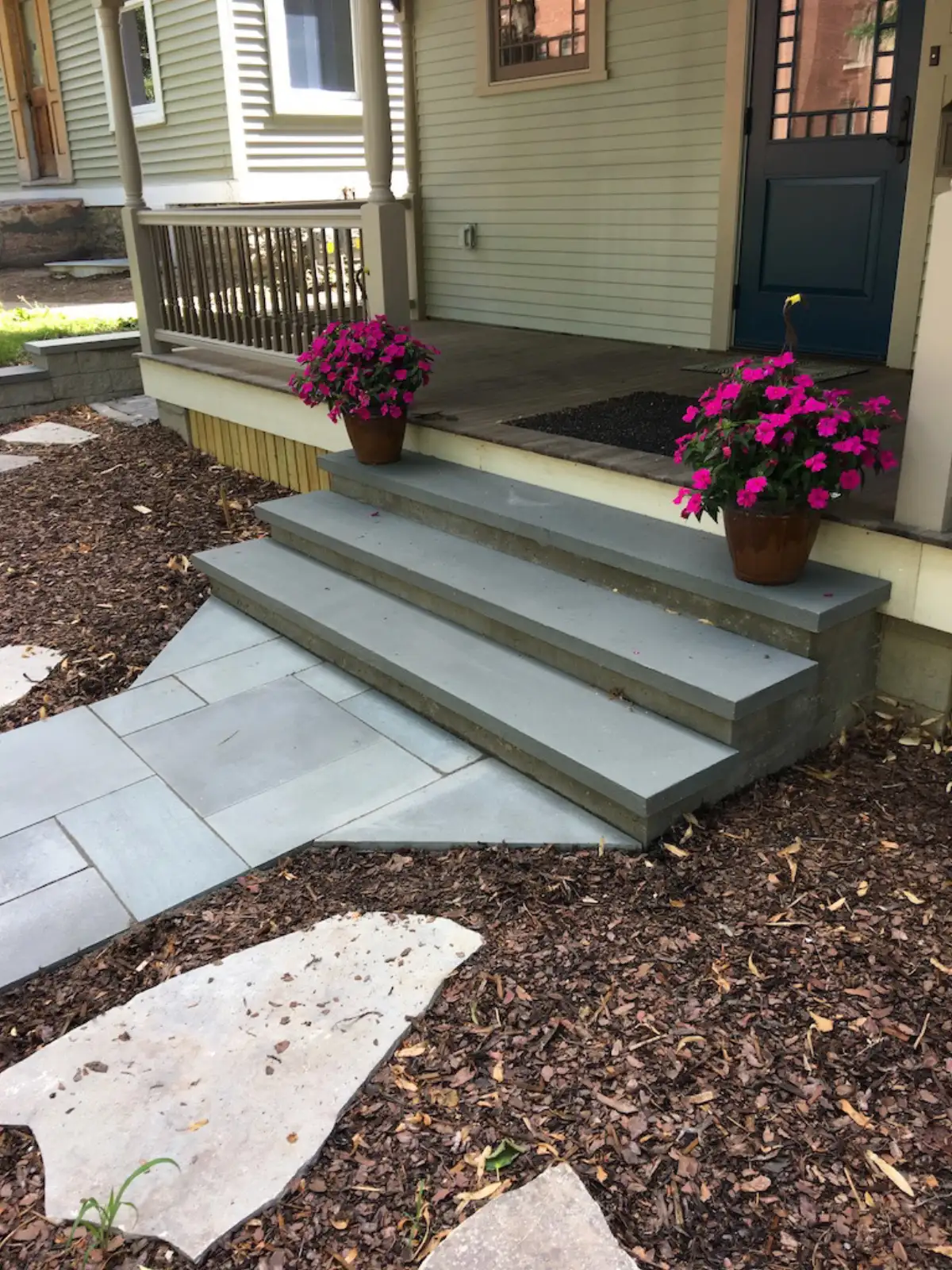
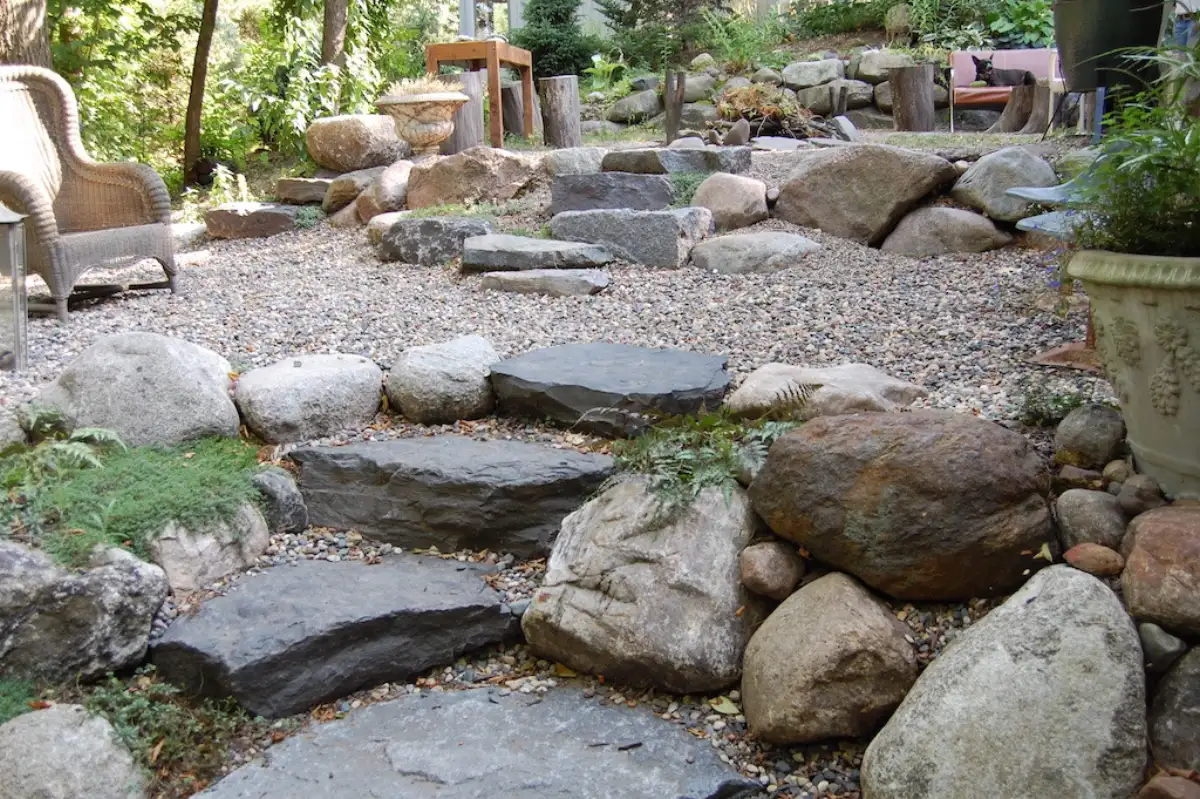
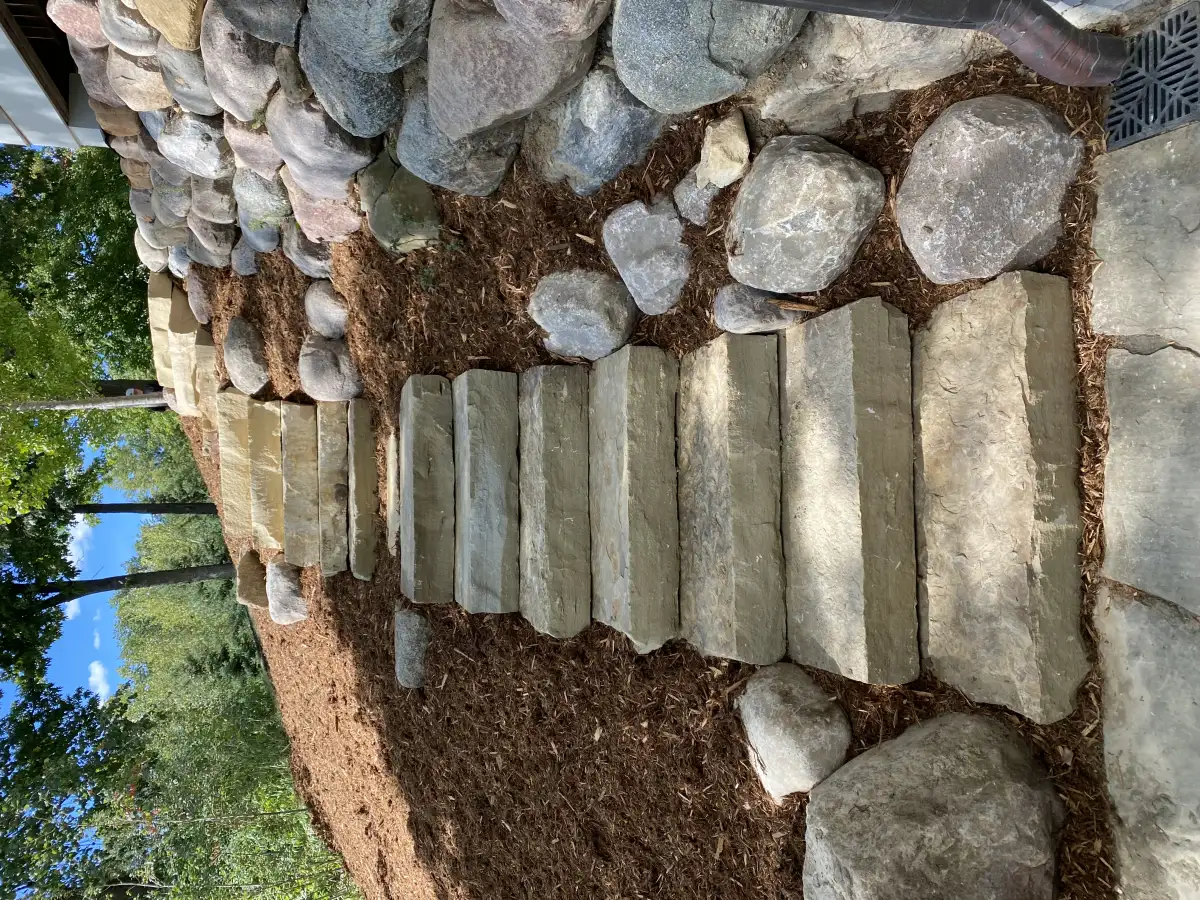
Bluestone, limestone, and granite slab steps create a premium, timeless look. Each stone is unique in character and coloring. Natural stone steps pair beautifully with boulder retaining walls and natural landscape designs. Heavier and more labor-intensive to install, which is reflected in cost, but the visual result is unmatched. Typical slab thickness: 2-3 inches with a 12-14 inch tread depth.
Modular Block Steps
Steps built from the same segmental retaining wall block as adjacent walls create seamless transitions. Block steps are the most cost-effective option for integrating steps into retaining wall systems. Available with matching cap units for a finished look. Excellent for side-yard access and functional grade transitions.
Wood & Composite
Steps connecting a wood or composite deck to the grade below are built from matching deck material for visual continuity. Composite steps resist rot, splinters, and ice damage better than pressure-treated wood. Closed risers prevent debris accumulation and provide a cleaner appearance. Often combined with stone or paver landings at the base.
Steps Work Best With
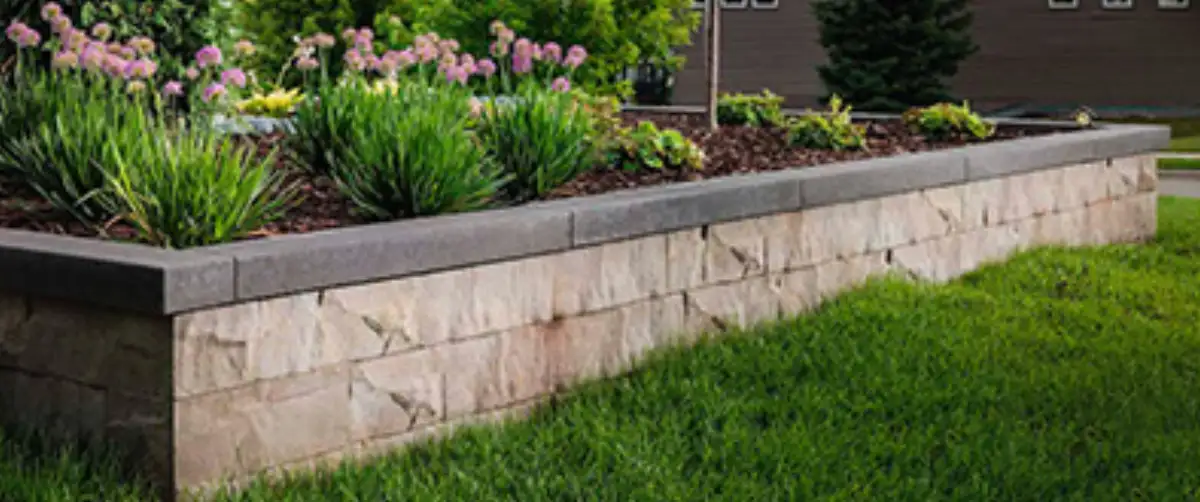
Retaining Walls
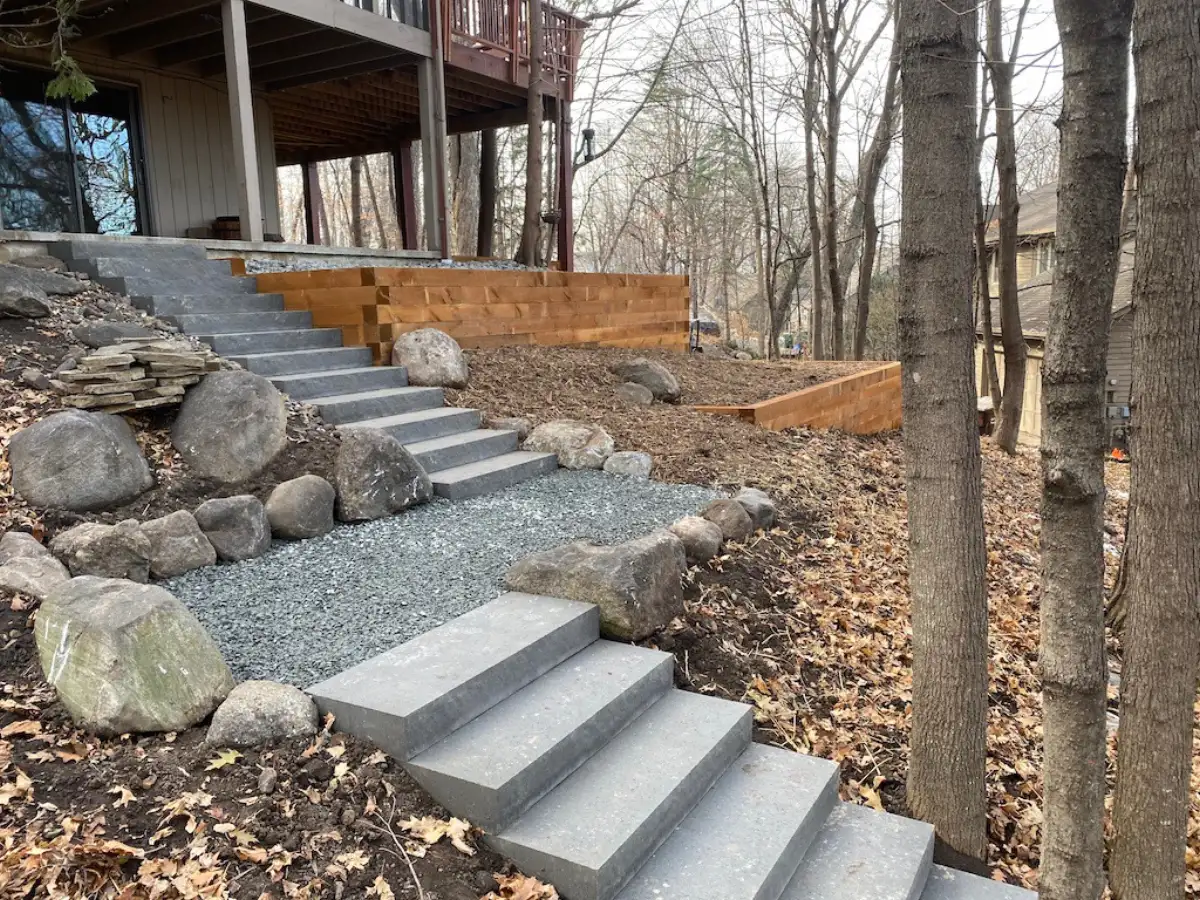
Steps are most commonly built as integral parts of retaining wall systems, providing access through grade changes.
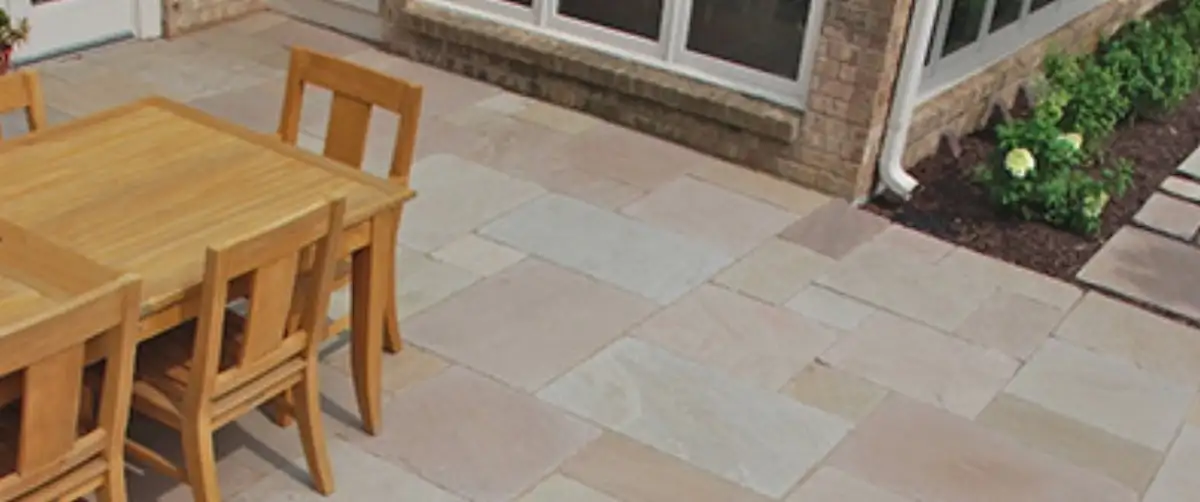
Patios
Steps connect upper and lower patio levels, decks to patios, and patios to lawn areas throughout your landscape.
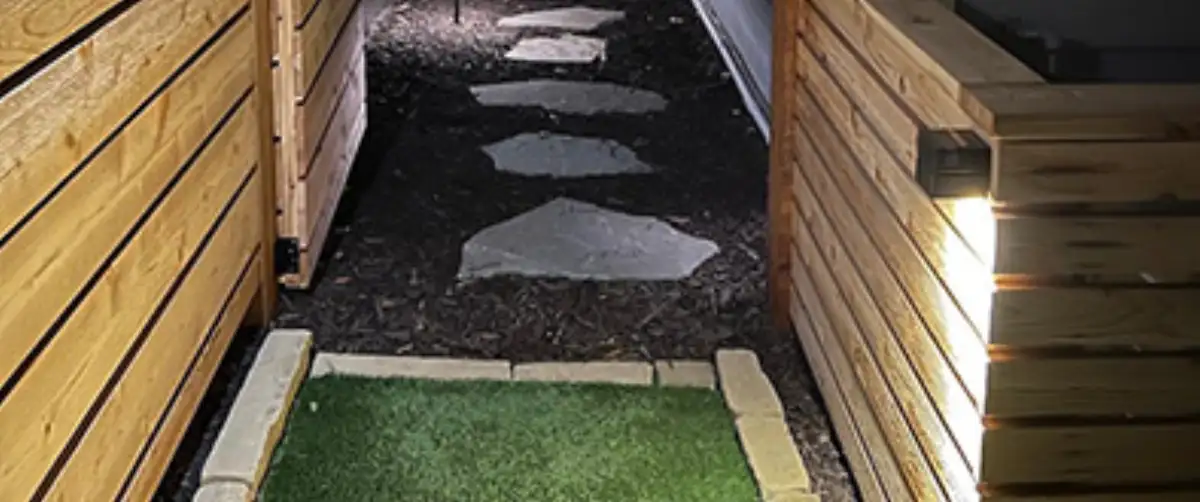
Landscape Lighting
Recessed LED step lights ensure safe navigation after dark and are essential for any steps in your landscape.
Industry Certifications & Partnerships






Steps FAQ
Landscape step costs depend heavily on material, width, and number of risers. A simple 4-step block stairway (4 feet wide) runs $1,500-$3,000 installed. Natural stone slab steps at the same scale run $3,000-$5,000. Wide, grand entrance stairs (6-8 feet wide, 6-10 risers) with paver treads and integrated lighting can reach $5,000-$12,000. Steps built as part of a retaining wall project are typically more cost-effective than standalone step installations because the base preparation and equipment are already on site.
Minnesota building code requires a graspable handrail on any stairway with four or more risers that serves as the primary means of egress. Landscape steps that provide secondary access (an alternative path, not the only way to reach an area) have more flexibility. For safety, we recommend handrails on any steps with three or more risers, regardless of code requirements. Options include powder-coated aluminum, stainless steel cable, and wrought iron in styles that complement your landscape design.
Design Steps That Elevate Your Landscape
Schedule a consultation to discuss step design and materials for your property. We will evaluate grade changes and design steps that are safe, beautiful, and built to last.